
10 Graphic Design Tips for Non-Designers
Top tips for design from designers for non-designers.
Let us share with you our awesome guide top 10 design tips on how to create the perfect printed design. Whether you’re designing the artwork for a promotional leaflet, the layout of your latest business card or an eye-catching banner to grab the attention of passers-by, you want to make sure you get it right.
It could end up being the first impression of your business, after all. So, instead of just half-heartedly slapping your logo on a plain background. Here we share our most common tips for designers and non-designers alike.
Whether you’re creating a business card or scaling up your ideas to poster size, check out our easy steps on how to make a poster for print if you want a guide to dimension setup and impactful design.
Graphic design tips from us to you!
Keep It Simple & Plan Ahead
It’s OK to admit you’re a beginner in creating design; most of us are. And when you’re a beginner, the best thing to do is to keep things simple. There’s no point in trying to overwhelm yourself with overly complicated design tools and theatrical imagery. Instead, make a plan of all the basics.
What is the aim of your graphic design? What effect do you want it to have? What information does it need to display? Once you have all this down, it’s much easier to begin. Design tip 1 down onto the next!
Do Some Research
Next, we suggest taking a look at what the leaders in your industry are doing. This is not to say that you are going to copy their design – that would be a terrible idea! However, it’s a good idea to grasp what is working for others and, in turn, give yourself some design inspiration.
Maybe there are certain elements of one design you like and elements of another you know you want to avoid. Together, with your own brand colours, logo and artwork, something unique and special may come to life.
There are plenty of places to look for inspiration now, more than ever, platforms like Instagram, Pinterest and TikTok are some great starting points.
If flyers are part of your marketing toolkit, don’t miss our ultimate guide to creating an eye-catching flyer design for more ideas on layout and visuals.
Design tip 2 done!
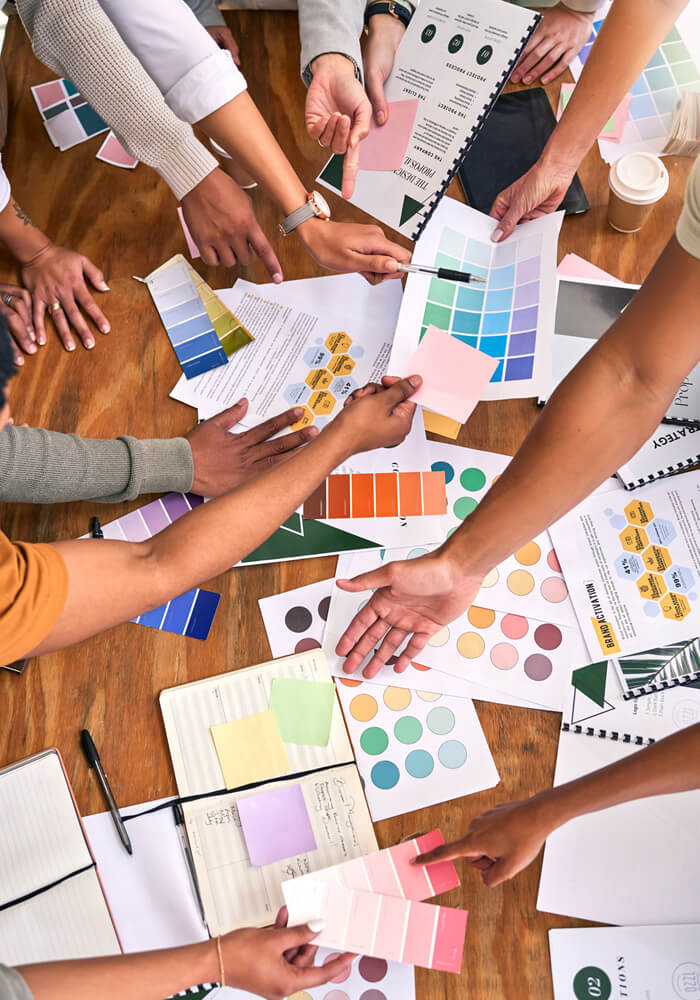
Use a Cohesive Colour Palette
Speaking of colours, one of the best design tips we can give you is choosing your colour palette wisely. Yes, you want your design to stand out, but you also don’t want to overload it with too many shades and graphics. Instead, achieve a nice balance of colour and contrast by using some of the “louder” colours on text and imagery you want to be noticed the most.
Not sure what this means? Learn more in our guide on What’s the Difference Between RGB and CMYK? to ensure your colours look just as stunning in print as they do on your screen.
Additionally, if you’ve already got a well-established business, then it’s worth using some of the colours already associated with it – it’s the perfect way to determine a strong brand identity! Design tip 3 destroyed!
Choose Your Fonts Carefully
Another key to learning graphic design is understanding the importance of fonts. Like our advice on colours, you don’t want to overdo it with too many typefaces, and it’s a good idea to consider how easily you need your customers to view it, whether it’s a design being seen up close or from far away.
It’s easy to feel overwhelmed with fonts, with so many graphic design tools offering an abundance, but we recommend choosing one or two fonts that pair nicely together across your entire design space.
Want to learn more about making your designs stand out? Check out our Great Guide on How to Make Your Leaflet Design Stand Out for typography tips and tricks specific to print materials.
By carefully choosing and formatting your fonts, you can make your design not only readable but also professional and polished.
Alternatively, you could choose just one font and use different formats for different aspects of design, such as bold for the heading, regular for the subheadings and italics for the small print. Design tip 4 done – you are on fire!
Don’t be Afraid of White Space
This can be a hard one to grasp, but a good design will often implement plenty of white space. Why? White space can help make your graphic design more visually appealing and, in turn, make it easier for readers to understand.
For example, imagine you’re creating a flyer, and you cover every element of its white space with some form of imagery or text.
The consumer isn’t going to know where to look and will likely become too overwhelmed to read it. Design tip 5 keep going!
Optimise Readability
Another important principle of graphic design is readability. At the end of the day, you want your customers to see and read your hard work. This can apply to how you overlay text onto the background, and again, the colours and fonts you use. You want the colour of your text to contrast significantly against the backdrop. Again, get some design inspiration and take a look at some graphic designs that you are attracted to the most. Design tip 6 – you’re over halfway now!
Keep in Mind Your Dimensions
This is an easy one to forget; we are all guilty of getting so excited about a new design scheme that we forget to stop and consider what dimensions we need. Again, make a point of researching the different sizes available, whether it’s an A4 folded leaflet, a slim-sized business card or an A5 brochure.
Planning something bigger? Check out our guide to standard poster sizes to ensure your large-scale designs look crisp and well-proportioned.
Correct dimensions are essential for effective printing. Explore how commercial printing benefits can make your designs stand out.
Check What File Type You Need
Like dimensions, another thing often overlooked during the design process is what file type you need. If you’re creating an online graphic for your website or social media, then this is even more important, but for those creating printed designs, it’s worth noting where and how you are getting it printed and what file type you need. Design tip 8 completed, woo hoo!
The best way to do this is to get in touch with the company you’re printing through, like that Print Stafford, and just ask!

Use Exciting Imagery
We’ve talked about the consequences of your colour palette and fonts, but what about imagery? We like to think of imagery as the salt and pepper of a good graphic design. It doesn’t need to be the centrepiece, but it can really make all the difference to a final product.
One good example of imagery is what is known as flat design. Flat design uses simple, two-dimensional elements and bright colours to create a three-dimensional effect.
It’s often easy to create but can be super impactful. Another piece of imagery worth using in your design scheme is your logo.
Get Your Facts Straight
One of our final design tips to keep in mind when becoming a great graphic designer is to proofread. Read, read and proofread your design more than you might want to. This ensures your design is accurate and free of errors, and avoids misleading your customers.
There’s nothing more unprofessional than a good design ruined by a mere spelling mistake! Take a break and step away, ask a colleague to take a look, send it to someone not at work, breathe, then read again!

When it’s Not Working, Take a Break!
There’s nothing wrong with taking a break, remember that! When you feel like you’ve been staring at your graphic design for too long and design inspiration fails to come, take a rest, go on a walk, sit down with a cup of coffee and think about something else for half an hour.
You’ll be amazed at the design thinking that will come after giving your brain some time out.
If you’re still feeling stuck, explore 5 excellent reasons to use a professional designer vs. doing it yourself to see if hiring an expert might be the right move.
Hire a Professional
Sometimes, despite your best efforts, creating the perfect design can feel overwhelming. Whether it’s due to time constraints, lack of confidence, or the complexity of the project, there’s no harm in handing it over to a professional. A skilled designer can bring your vision to life and ensure your final product looks polished, impactful, and print-ready.
At Print Stafford, we specialise in creating standout designs for logos, banners, business cards, leaflets, and more. Whether you have a clear vision or need help starting from scratch, our team is ready to assist.
Simply get in touch, and we would be more than happy to help.


